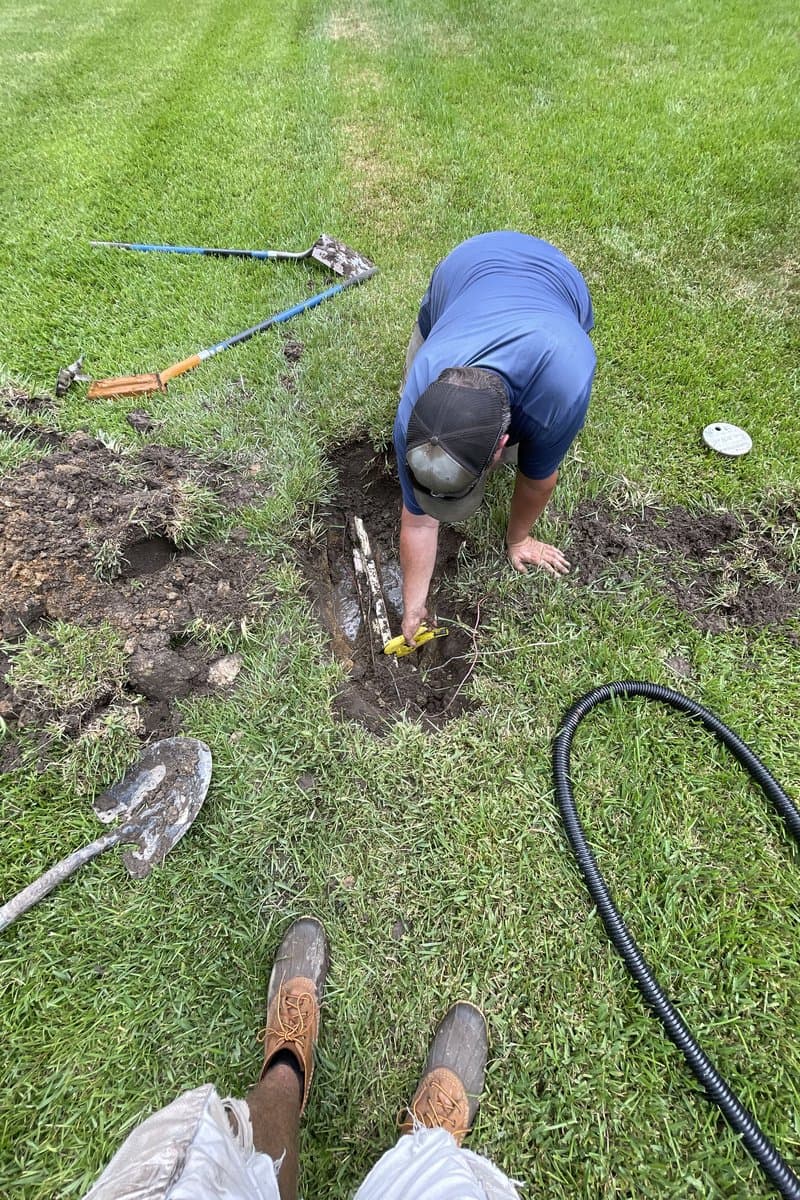
Clay-heavy soil is common in this region, but it varies property to property
Many Southwest Georgia properties sit on soil that's heavier in clay than the sandy soils further south or the loam found in parts of the Piedmont, though soil texture varies by site and isn't the same on every lot. Where clay is present, its particles are small and pack tightly, so water moves through it slowly. A lot slower than most homeowners assume based on how quickly a driveway or street seems to dry.
That's not automatically a problem. Clay soil holds nutrients and moisture well, which is part of why lawns and beds in this region can look good with less irrigation than sandier soil requires. The issue shows up when a heavy rain event outpaces how fast the ground can absorb it. The water has nowhere to go but sideways, across the surface, until it finds a low spot.
A flat lot hides grading problems that a sloped one would reveal
Southwest Georgia's terrain is relatively flat compared to North Georgia. That's generally a good thing for construction, but it also means small grading mistakes matter more here than they would on a hillside lot. On a sloped property, water has an obvious path downhill even with imperfect grading. On a flat property, even a slight reverse slope, sometimes less than an inch of fall in the wrong direction over several feet, can be enough to hold water against a foundation, a patio, or a low spot in the yard instead of carrying it away.
This is one reason two neighboring Albany properties can have very different experiences in the same storm. The lot itself, not just the soil, determines where water collects.
Downspouts and hard surfaces concentrate water instead of spreading it out
A roof collects a lot of water very quickly, and every downspout is designed to release all of that water at one point. If a downspout empties near the foundation, onto a low spot, or onto ground that's already saturated, it can turn a manageable rain event into a visible puddle, even on a property with reasonably good overall grading.
Driveways, patios, and walkways behave the same way at a larger scale. Water sheets off hard surfaces instead of soaking in, and if that sheet flow is aimed toward the house rather than away from it, it adds volume to whatever the soil and grading are already struggling to handle.
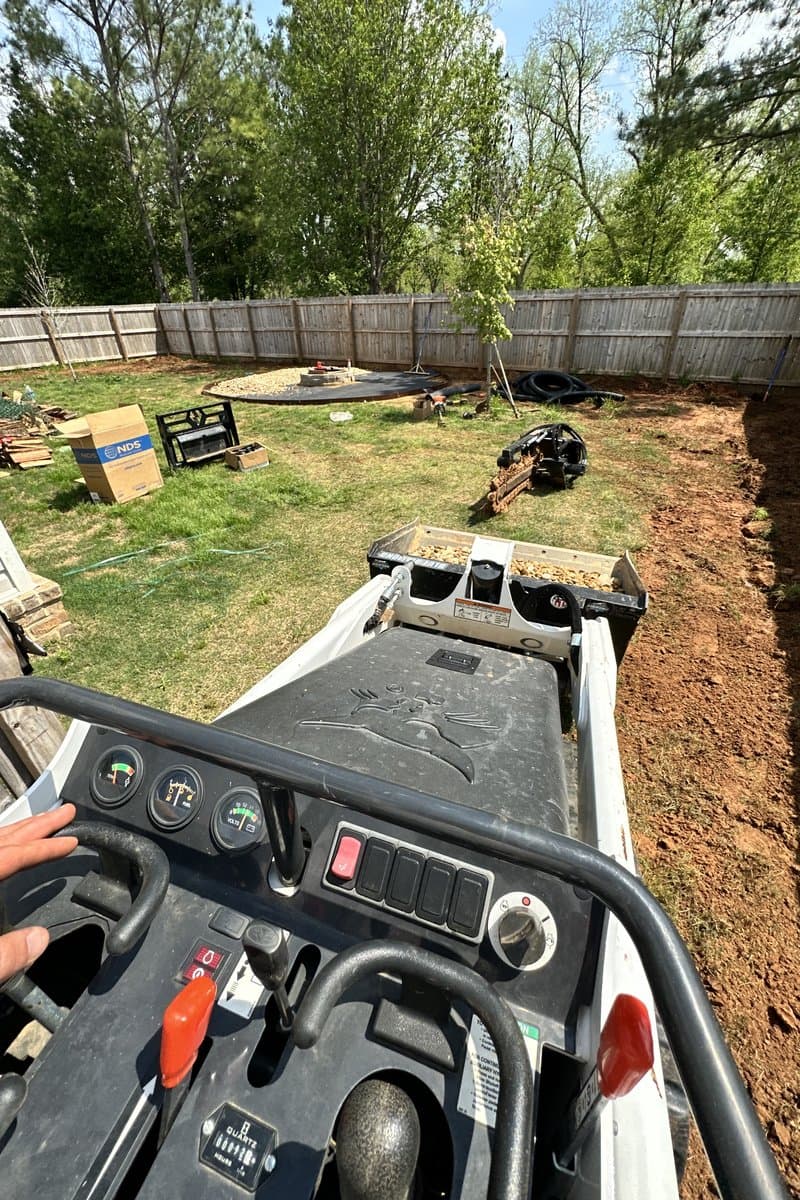
Site grading corrects the slope of a lot so water moves toward the right discharge point instead of pooling.
What's normal, and what's worth a closer look
Some standing water after a heavy rain is normal for this region's soil, especially in the lowest spot of a yard or along a fence line where water naturally collects before percolating. As a general guide: water that noticeably recedes within 24–48 hours after a heavy rain is common and often not urgent.
Water that's still standing several days later, that returns after every rain regardless of how light, that's moving toward or pooling against the foundation, or that's affecting the same spot in the lawn badly enough to kill grass. Those are patterns worth having looked at. We're not going to tell you what's wrong with a specific yard from a description alone, and you shouldn't trust anyone who does. A real diagnosis means walking the property, tracing where water enters and where it's failing to exit, and checking grade, downspout discharge points, and soil conditions in person.
How a drainage assessment actually works
When we walk a property for a drainage problem, we're tracing water movement from where it enters (rainfall on the roof and ground, water crossing in from a neighboring lot) to where it's supposed to exit. That means reading the existing grade, checking downspout discharge locations, identifying low spots, and understanding the soil's condition. Only after that picture is clear do we recommend a fix, whether that's a French drain, surface regrading, a catch basin, or some combination. Our full breakdown of French drains, grading, and surface drainage options is on the Drainage Solutions page linked below.