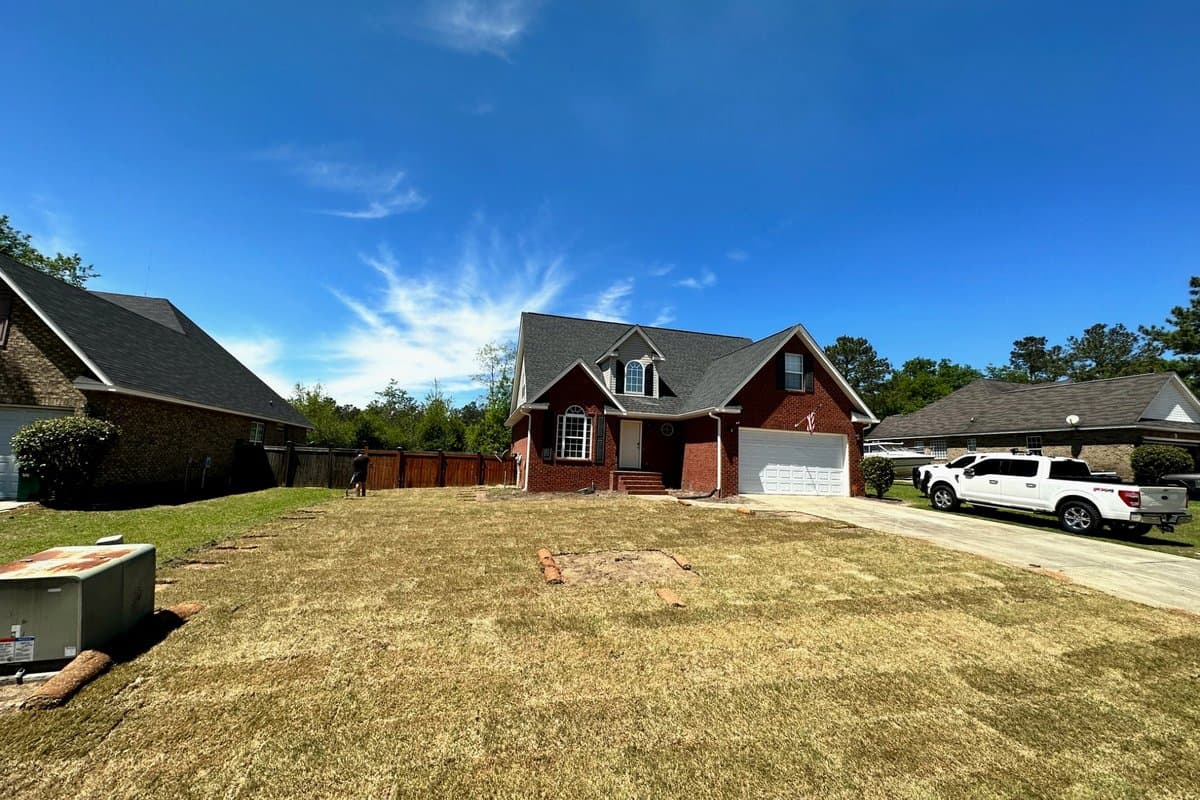
All three are warm-season grasses. That's not the decision
Albany spans USDA Hardiness Zones 8b and 9a (hot summers, mild winters, occasional frost) and that warm-season, humid subtropical climate supports several turf types well, so the real question isn't which grass survives here. All three of these do. The decision comes down to sun exposure, how much maintenance you actually want to keep up with, how the lawn is used, and what you're willing to spend both at installation and over time.
Bermuda: the most durable, the most demanding
Bermuda is the most common choice in Albany for a reason. It's aggressively heat- and drought-tolerant, handles full sun without complaint, and recovers from foot traffic, pets, and general wear faster than the other two. If you have kids, dogs, or a yard that gets genuinely used rather than just looked at, Bermuda holds up best.
The tradeoff is upkeep. Bermuda grows fast during the growing season and needs frequent mowing to look right. Letting it go too long between cuts is the single most common reason a Bermuda lawn looks rough. It also has essentially no shade tolerance; Bermuda planted under mature trees will thin out and struggle regardless of how well it's cared for.
Zoysia: denser and lower-maintenance, at a price
Zoysia is a premium option for homeowners who want a thick, soft, more manicured-looking lawn. Its lateral spread is slower than Bermuda's, which cuts down on how often it needs edging and encroachment control, and it has good drought tolerance once established, but its mowing interval is closer to Bermuda's than people often assume, since both typically need cutting every 4–7 days in peak growing season. It also handles light-to-moderate shade somewhat better than Bermuda, though it still performs best in mostly sunny conditions.
The tradeoffs are cost and patience. Zoysia sod costs more than Bermuda, and because it spreads more slowly, bare or thin spots take longer to fill in on their own. It's a good fit for homeowners prioritizing appearance and a denser, more manicured lawn over the fastest, cheapest path to a full lawn.
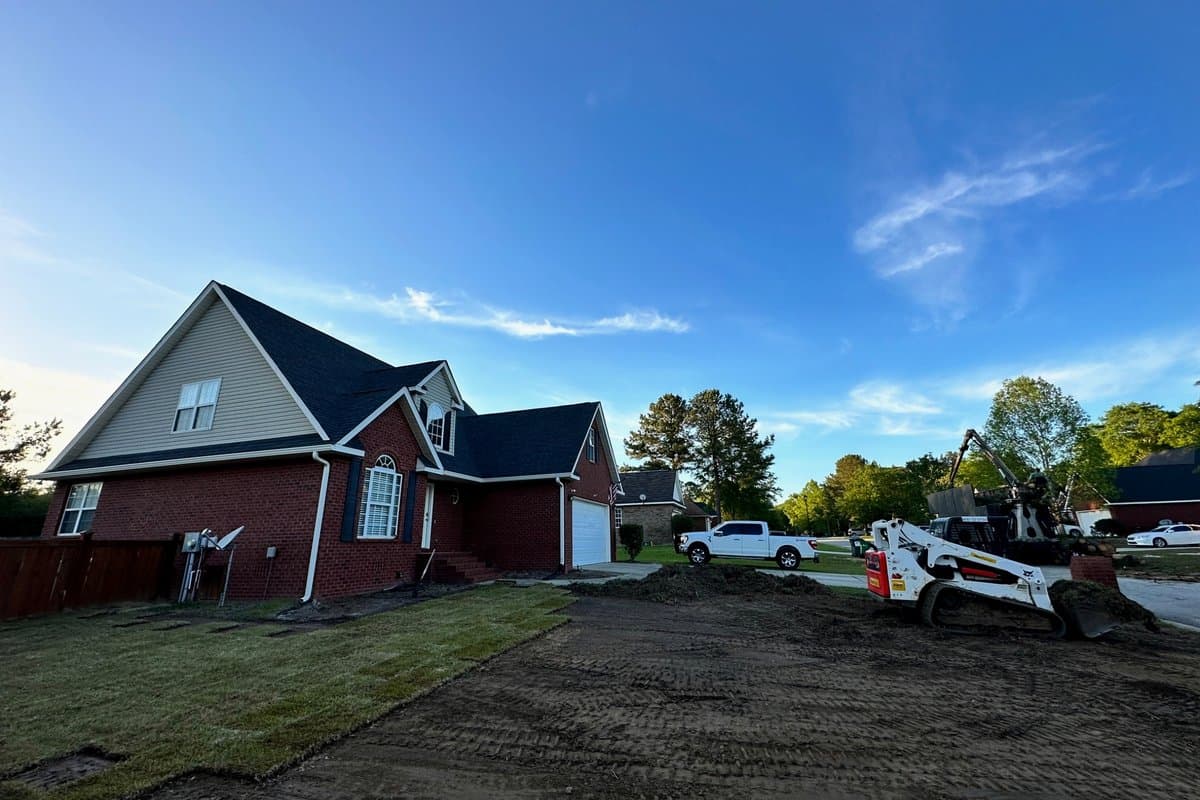
Sod being laid with staggered seams during installation, before the rooting period begins.
Centipede: low input, but don't rush it or over-fertilize it
Centipede grass is well suited to the acidic, sandy-clay soils common across southern Georgia and requires meaningfully less fertilizer than Bermuda or Zoysia. In fact, over-fertilizing centipede is one of the more common ways homeowners damage it, since it's adapted to low-nutrient soil. It's a reasonable choice for homeowners who want a lower-maintenance, lower-input lawn and aren't chasing a golf-course look.
It establishes more slowly than Bermuda, has lower wear tolerance for heavy foot traffic or pets, and doesn't recover from damage as quickly as Bermuda does. Centipede also prefers full sun to light shade. Like the other two, it isn't a true shade grass.
None of them solve a bad site. Soil prep still comes first
Whichever grass you choose, the single biggest predictor of whether new sod succeeds is soil preparation, not the variety itself. Sod laid on compacted or poorly graded ground struggles regardless of what's on the label. If you're weighing grass types because you're planning a new sod installation, our Sod Installation page covers the full process: soil assessment, grading, and the rooting period that determines whether new sod takes.